Plates/Bowls
Let’s avoid plates or bowls that leach lead into food. Vintage dishes, pottery, decorative or brightly colored dishes, or ceramics contain lead in their glaze, decoration, and colors. Stick with clear white plates that do not use lead-based glazes. Stainless steel is another option. But it’s important to make sure that acidic food doesn’t sit on it for a long time.
Recommended products:
- Corelle Vitrelle 6-Piece Soup/Cereal Bowl Set, 18 oz
- Corelle 4-Pc Versa Bowls for Pasta, Salad, and More
- Corelle Vitrelle 28-oz Soup/Cereal Bowls Set of 6
- 8 Pack Double Insulated Stainless Steel Bowls
Pans & Pots
I like to use Stainless Steel, Carbon Steel, or Cast Iron. Scrub off the pre-seasoning when buying cast iron since it most likely uses hydrogenated or unhealthy oil. It is also essential to remember that non-stick pans are coated with Teflon or similar coatings. Those coatings often contain PFAS (per- and polyfluoroalkyl substances), which is a group of chemicals linked to hormone disruption, liver damage, and other health risks. They also use PFOA (perfluorooctanoic acid), which has been banned due to its toxic effects, but other similar chemicals are still in use. So yes, it is best to be avoided.
One thing to remember when using cast iron is that certain foods can cause excessive iron leaching or damage the seasoning. These foods include:
- Tomatoes & Tomato Sauce
- Citrus-Based Dishes
- Wine or Vinegar-based Sauces
Cast iron is not friendly for long-simmering or braised dishes like chili, bolognese, braised meat, etc. If the iron leaches, you can taste it immediately, causing a metallic taste. So, use stainless steel when making a stew or anything that requires longer than 30 minutes of cooking and simmering. Cast iron is still great for searing meat or making a toasty grilled sandwich!
Recommended products:
- Cast Iron Casserole Dish with Lid, 6QT, 9″ x 13″
- Misen Enameled Cast Iron Dutch Oven, 7QT
- Stainless Steel Muffin Pan 12-cup, Set of 2
- Misen Carbon Steel Pan, 12″
- Cast iron
- Stainless Steel Pots
- Glass Lids for pans
- All-Clad Stainless Steel Ramekin with Lid 2 Piece Oven Broiler Safe 600F
Cooking Equipment
Say goodbye to anything silicone, especially black silicone tools. Not all black silicone utensils are food-safe; some release VOCs when exposed to high heat and the flame retardant DecaBDE, which is frequently used in electrical appliances but has been banned in the EU since 2008.
Utensils
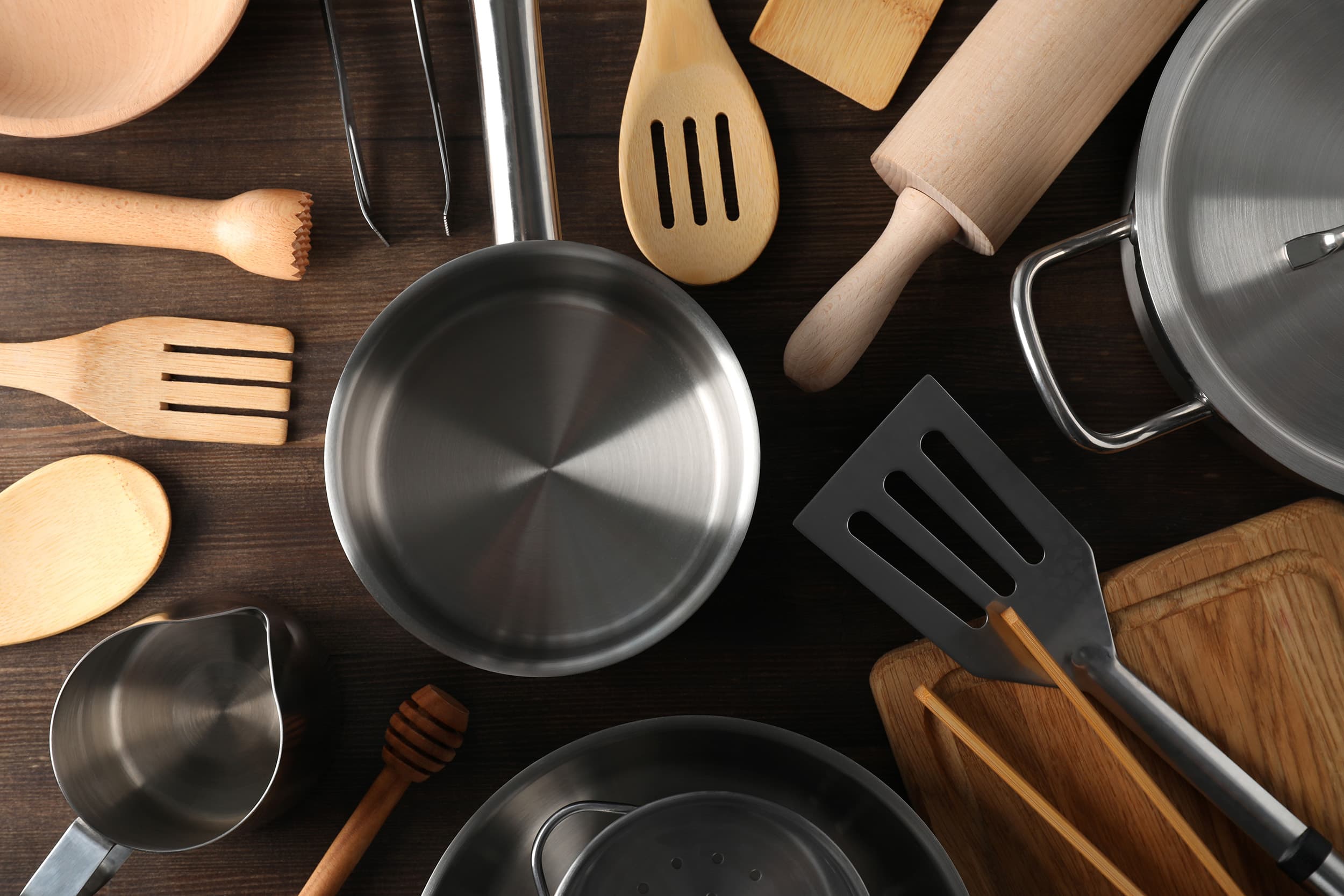
Choose stainless steel or untreated wood. Toss the plastic utensils to minimize exposure to microplastics and chemicals (like BPA or phthalates). Bamboo or wooden tools can be good but often treated with chemical finishes or adhesives.
Recommended products:
- 10 Pcs Stainless Steel Kitchen Utensils Set
- All-Clad Stainless Steel Measuring Cups, 5 Pcs
- All-Clad Stainless-Steel 8 pc. Standard-Size Measuring Cup & Spoon Combo Set
- SABATIER Stainless Steel Triple Rivet Wide Turner
- Stainless Steel Whisk Set, 3 Pack
- Stainless Steel Mixing Bowl, Set of 5
Cutting Board
I like to choose one solid wood cutting board. A board made with multiple pieces glued together contains toxic adhesives that can leach into food over time.
It is best to avoid plastic cutting boards. One month of use can contribute the equivalent of a credit card worth of microplastics into the body.
Recommended product:
Containers
Switch all plastic containers to glass or stainless steel. Their lid can be plastic, but ensure no direct contact between the food and plastic. Plastic can leak even if it’s not heated!
Recommended products:
- 10-Pack Stainless Steel Food Container
- 8oz Mason Jars, 6-Pack
- 32oz Mason Jars, 4-Pack
- Stainless Steel Mason Jar Lid, 12-Pack
- Snapware Pyrex 18-piece Glass Food Storage Set
*Notes about mason jars: When freezing broth or liquid in mason jars, do not use the ones with “shoulder,” meaning the curve below the lid. Choose the one with a straight body.
If you need something to wrap your food with, use Organic Unbleached Cotton Cheesecloth, Large 18sqft. Wetting this cloth with water will be an excellent replacement for plastic wrap. Another great option is beeswax wrap.
Water Bottle
Switch all plastic water bottles to stainless steel or glass. While the tops might be plastic, try not to drink from or pour liquids through the plastic whenever possible.
Recommended products:
Drinkware
Drinkware is the same thing as water bottles. Let’s avoid plastic and use stainless steel or glass. We switched all of the glasses to those shatter-resistant glasses made in Japan; I have not broken any glass since then.
Recommended products:
- Toyo Sasaki Shatter-resistant 12.8fl oz Whiskey Glass, Set of 6
- Bormioli Locco Glass Clear Pitcher, 33.75 oz
- Bormioli Locco Glass Clear Pitcher, 68 oz
- HALM Glass Straws Variety Pack
Points to keep in mind
- Avoid anything plastic
- Avoid aluminum pans/pots/utensils
- Avoid non-stick coated pants/pots/baking sheets
- Avoid anything silicone
- Avoid lead
- Stick with stainless steel, carbon steel and cast iron pans/pots
- Use glass to store food acidic food